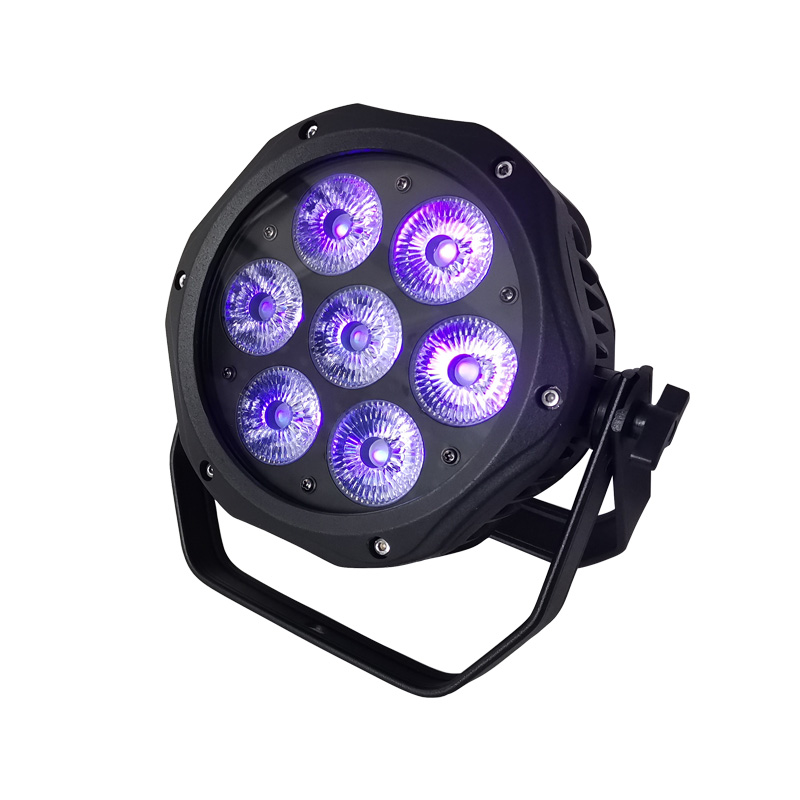
The world of lighting technology has seen significant advancements over the past few decades, with LED lights taking center stage due to their efficiency and versatility. Among these, the PAR value of LED lights is a crucial factor for many applications, especially in stage lighting. Understanding the PAR value is essential for optimizing the performance of LED Par Light and other lighting solutions. This article delves into the intricacies of PAR value, its importance, and its implications for LED lighting technology.
Understanding PAR Value
PAR, or Photosynthetically Active Radiation, refers to the range of light wavelengths that plants use for photosynthesis. However, in the context of LED lights, PAR value is often used to measure the intensity of light that is useful for specific applications, such as stage lighting or plant growth. The PAR value is measured in micromoles per square meter per second (µmol/m²/s), indicating the number of photons in the PAR range that reach a given area each second.
For stage lighting, understanding the PAR value helps in determining how effectively the light can illuminate a stage, enhancing the visual experience of performances. This is particularly important for LED Stage Light, where precise lighting is crucial for creating the desired ambiance and effects.
Factors Affecting PAR Value
Several factors influence the PAR value of LED lights. These include the type of LED chips used, the design of the light fixture, and the power supply. High-quality LED chips tend to have a higher PAR value, providing more efficient lighting. The design of the fixture, including reflectors and lenses, can also impact how light is distributed and its intensity. Moreover, the power supply must be stable to ensure consistent performance.
Manufacturers like GuangDong Future Optoelectronics Technology Co., Ltd. focus on optimizing these factors to produce high-performance LED lights. Their expertise in stage lighting solutions ensures that their products meet the demands of various events and performances.
![Applications of LED PAR Lights]()
Applications of LED PAR Lights
LED PAR lights are widely used in various applications due to their versatility and efficiency. In stage lighting, they are essential for creating dynamic lighting effects and enhancing the visual appeal of performances. The ability to control the intensity and color of LED PAR lights allows for creative freedom in designing lighting setups.
In addition to stage lighting, LED PAR lights are also used in architectural lighting, retail displays, and even in horticulture. Their high PAR value makes them suitable for applications where precise lighting is required. For instance, in horticulture, LED PAR lights can be used to optimize plant growth by providing the necessary light spectrum for photosynthesis.
Advantages of LED PAR Lights
LED PAR lights offer several advantages over traditional lighting solutions. They are energy-efficient, consuming less power while providing the same or greater light output. This efficiency translates to cost savings on electricity bills, making them an economical choice for both commercial and residential applications.
Moreover, LED PAR lights have a longer lifespan compared to traditional bulbs, reducing the need for frequent replacements. This longevity is particularly beneficial in stage lighting, where reliability is crucial. The durability of LED lights also makes them suitable for outdoor use, as they can withstand harsh environmental conditions.
Technological Innovations in LED Lighting
The field of LED lighting is constantly evolving, with new technologies emerging to enhance performance and efficiency. Innovations such as smart lighting systems and advanced control mechanisms have revolutionized the way LED lights are used. Smart lighting systems allow for remote control and automation, enabling users to adjust lighting settings with ease.
Advanced control mechanisms, such as DMX and RDM protocols, provide precise control over lighting effects, making them ideal for stage lighting applications. These technologies enable lighting designers to create complex lighting setups that can be easily modified to suit different performances.
Future Trends in LED Lighting
As technology continues to advance, the future of LED lighting looks promising. One emerging trend is the integration of artificial intelligence (AI) in lighting systems. AI can analyze data from various sensors to optimize lighting conditions automatically, enhancing energy efficiency and user experience.
Another trend is the development of more sustainable lighting solutions. Manufacturers are focusing on reducing the environmental impact of LED lights by using eco-friendly materials and production processes. This shift towards sustainability aligns with the growing demand for environmentally conscious products.
Conclusion
In conclusion, the PAR value of LED lights is a critical factor in determining their effectiveness for various applications. Understanding this value helps in optimizing lighting setups for stage performances, architectural displays, and horticultural purposes. With ongoing technological advancements, LED lighting continues to evolve, offering new possibilities for efficiency and creativity. For those interested in exploring the potential of LED lighting, companies like GuangDong Future Optoelectronics Technology Co., Ltd. provide innovative solutions that cater to diverse needs.
FAQs
1. What is the significance of PAR value in LED lights?
PAR value measures the intensity of light useful for specific applications, such as stage lighting and plant growth, indicating how effectively the light can illuminate a space.
2. How do LED PAR lights benefit stage performances?
LED PAR lights offer dynamic lighting effects and precise control over intensity and color, enhancing the visual appeal and ambiance of stage performances.
3. What factors influence the PAR value of LED lights?
The type of LED chips, fixture design, and power supply stability are key factors affecting the PAR value of LED lights.
4. Are LED PAR lights suitable for outdoor use?
Yes, LED PAR lights are durable and can withstand harsh environmental conditions, making them suitable for outdoor applications.
5. What are the future trends in LED lighting technology?
Future trends include the integration of AI for optimized lighting conditions and the development of sustainable lighting solutions using eco-friendly materials.
6. How do smart lighting systems enhance LED light usage?
Smart lighting systems allow for remote control and automation, enabling users to adjust lighting settings easily and improve energy efficiency.
7. Why is LED lighting considered environmentally friendly?
LED lighting is energy-efficient, has a longer lifespan, and manufacturers are increasingly using eco-friendly materials and processes, reducing environmental impact.